


MDF vs Decorative Board vs Veneer Which Material Is Best for Bespoke Furniture
Ask a cabinet maker “What material is best?” and the honest answer is rarely a single product. The better question is where the material will be used, how it will be finished, and what the furniture needs to do every day.
Bespoke furniture often works best when it combines materials. A wardrobe might have painted MDF doors, decorative board interiors and veneer feature panels. A media wall might use MDF for the detailed painted sections, melamine board for practical storage, and veneer where natural timber warmth matters most.
That mix is not a compromise. It is good furniture design.
The right material affects the look, feel, cost, durability and long-term maintenance of a project. It also affects details such as edges, door styles, spray finish quality, internal storage, lighting and installation.

There is no single best material for every piece of bespoke furniture
Bespoke furniture has different zones, and each zone does a different job.
The visible doors and panels create the overall look of the room. The cabinet interiors need to resist everyday use. Shelves need strength. Drawer boxes must cope with regular movement. Decorative features need crisp detail or natural grain, depending on the design.
That is why professional cabinet making rarely starts with a fixed material. It starts with questions:
Will the furniture be painted?
Does the design need a timber effect?
Is the surface visible or hidden inside?
Will the area receive heavy daily use?
Does the room need moisture-resistant materials?
Is the priority finish, practicality, budget or natural character?
Once those questions are clear, the material choice becomes much easier.
MDF, decorative board and real wood veneer all have a place in fitted furniture. Each one solves a different problem.
MDF is ideal for painted bespoke furniture
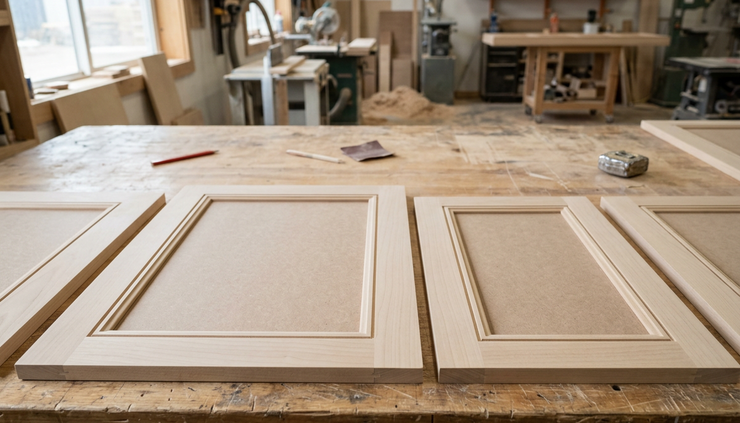
MDF, or medium-density fibreboard, is widely used in professional cabinet making. It is especially useful when the final piece will be painted.
Its main strength is consistency. MDF has a smooth, even surface without natural grain, knots or movement lines. That makes it well suited to preparation, priming and spray finishing. When handled properly, it can produce a very clean painted finish with sharp lines and a contemporary feel.
MDF also machines well. Cabinet makers can use CNC equipment to create profiles and decorative details that would be harder, slower or less stable in some natural materials.
That includes:
Shaker-style wardrobe doors
V-groove panelling
Decorative end panels
Fluted or routed details
Media wall sections
Painted kitchen fronts
Wall panelling
Built-in alcove units
For painted work, MDF often gives a more predictable finish than solid timber. Natural timber can move with changes in temperature and humidity. It can also show grain texture through paint. That may suit some designs, but it is not always the best route for a crisp modern finish.
Moisture-resistant MDF can also be specified where appropriate. This is useful in areas where humidity may be higher, although it still needs correct sealing, finishing and installation.
MDF is often the best choice when the design depends on a flawless painted surface or shaped detail.
MDF has limits as well as strengths
MDF is practical, versatile and widely used, but it is not the answer to every part of a project.
It needs proper preparation. Edges must be sealed well because they can absorb more finish than the face of the board. Poor preparation can lead to uneven paint absorption, rough edges or visible imperfections.
It is also usually heavier than some alternatives, which matters on large doors or wide panels. A good design should take weight, hinges and fixing points into account.
MDF is not normally chosen when the brief calls for real timber character. It can be painted beautifully, but it will not give the depth, grain and variation of real wood veneer.
Best uses for MDF include:
Painted doors
Machined detail
Feature surfaces
Moisture-resistant applications
Wardrobes, kitchens, utility rooms and fitted cabinets
Shaker profiles, V-grooves, panelling and decorative fronts
Media units, alcove cabinetry and painted wall panelling
Selected areas where the right grade and finish are specified
The key is quality. MDF furniture can look basic when made and finished poorly. In skilled hands, with careful machining and professional spray finishing, it can look refined, clean and built to last.
Decorative board and melamine are practical for interiors
Modern decorative boards have improved a great deal. They are no longer just plain white cabinet material. Good ranges now include realistic timber textures, stone-inspired finishes, soft neutrals, deep colours and subtle fabric effects.
Decorative board usually has a manufactured surface already applied to the board. Melamine-faced boards are a common example. Because the surface is already finished, it does not need spray painting in the same way MDF does.
That makes it especially useful for the internal parts of fitted furniture.
Wardrobe interiors are a good example. Inside a wardrobe, the priorities are durability, easy cleaning, scratch resistance and a finish that looks good when the doors are open. Decorative board handles those needs well.
It also keeps the project efficient. Using spray-finished MDF for every internal surface can add cost and time, often without improving how the furniture performs day to day.
Decorative board works well for:
Wardrobe interiors
Shelving
Drawer boxes
Kitchen cabinetry
Utility room furniture
Bookshelves
Boot room storage
Fitted storage areas
At CMC Interiors, premium decorative boards, including selected ranges from Finsa, are used to offer a wide choice of contemporary colours and timber effects. These boards are practical, stable and well suited to the hidden and semi-visible parts of fitted furniture.
Decorative board is often the smart choice when the furniture needs hard-wearing interiors with a consistent finish.

Decorative board is not only a budget option
Some people still think of melamine or decorative board as the cheap choice. That view is out of date.
There are basic boards, and there are premium boards. The difference shows in the surface texture, colour depth, edge quality, durability and overall feel. A well-chosen decorative board can look excellent inside fitted furniture, especially when paired with painted doors or veneer details.
The biggest benefit is practicality. Decorative board is easy to wipe clean and does not need the same ongoing care as some natural materials. It also allows a timber effect where solid timber or veneer may not be necessary.
This makes it useful when a project needs a warm look without the cost or maintenance of natural wood in every area.
For example, a bedroom design might use:
Painted MDF for the external wardrobe doors
Oak-effect decorative board for the interiors
Integrated LED lights for visibility
Veneer only on a dressing table or open feature section
Lights, bespoke storage, space planning, room proportions and finish ideas all influence how the completed furniture feels. The material is only one part of the design, but it affects all the others.
Real wood veneer brings natural timber character
Real wood veneer offers something different from both MDF and decorative board.
A veneer is a thin layer of genuine timber bonded to a stable board. This gives the appearance and feel of real wood, while the core board helps reduce many of the movement issues associated with solid timber.
The result is elegant and controlled. Veneer can show the natural grain, tone and variation of timber without requiring every component to be made from solid wood.
It works especially well where timber will be a visible design feature.
Common uses include:
Feature doors
Open shelving
Media units
Wall panels
Display cabinetry
Kitchen feature areas
Bedroom furniture accents
Bespoke dining or living room storage
Veneer is often chosen when the design needs warmth and depth. Painted finishes can look clean and calm. Decorative boards can look practical and consistent. Veneer adds natural variation, which can make a piece feel more individual.
Book-matched veneer can create a strong feature, with grain mirrored across doors or panels. Straight-grain veneers can give a calm, architectural look. Darker veneers can add richness to media walls or fitted living room furniture.
Veneer is the best choice when real timber character is central to the design.
Veneer needs careful planning and finishing
Veneer is beautiful, but it needs respect.
Because it is a natural material, variation is part of the appeal. No two leaves of veneer are exactly the same. Grain, tone and figure can vary, even within the same timber species.
That can be a benefit, but it also means the design needs careful selection and layout. Door sets, visible panels and adjoining surfaces should be planned so the grain direction feels intentional.
Veneer also needs the right finish. Lacquer, oil or other finishing systems can change the final tone and level of sheen. Samples are useful because raw veneer often looks different once finished.
Compared with decorative board, veneer normally costs more and requires more specialist handling. It may also need more care in use, especially on surfaces that face heavy wear, direct sunlight or moisture.
For the right project, that extra care is worthwhile. Veneer brings a natural quality that manufactured timber effects cannot fully copy.
How the three materials compare
The best way to compare these materials is by role, not by ranking them from best to worst.
Material | Best suited to | Main strength | Useful note |
MDF | Painted doors, panels and detailed profiles | Smooth surface for spray finishing | Choose moisture-resistant grades where suitable |
Decorative board and melamine | Interiors, shelves, drawers and carcasses | Durable finished surface | Premium boards can look refined and modern |
Real wood veneer | Feature panels, doors and visible timber areas | Genuine timber appearance | Needs careful selection, layout and finishing |
This is why many high-quality fitted furniture projects combine all three. Each material is used where it performs best.
A kitchen might use painted MDF doors, decorative board carcasses and veneer open shelving. A wardrobe might use MDF for the doors and decorative board inside. A media wall might combine spray-finished MDF with veneer feature panels around a fireplace or display area.
Cost also changes depending on material choice, but material is only one part of the price. Layout, room size, door style, finish, internal storage, hardware, installation and lighting all matter. Search questions such as “What does a bespoke kitchen cost in Jersey? Discover the factors that affect cabinetry prices, including layout, materials, finishes and internal storage” reflect this wider picture. The board choice matters, but so does the complexity of the whole design.

The best material depends on the job it needs to do
A well-designed furniture project does not force one material into every role. It matches the material to the function.
Choose MDF when the priority is:
A painted finish
Clean profiles
Shaker doors
Routed detailing
Smooth contemporary panels
Choose decorative board when the priority is:
Practical interiors
Easy cleaning
Durable shelving
Consistent colour or texture
Good value in hidden or semi-visible areas
Choose real wood veneer when the priority is:
Natural timber grain
A premium visible feature
Warmth and character
Book-matched or grain-matched design
A more furniture-like finish
The most successful answer is often a combination. Painted MDF can give the room its clean external look. Decorative board can make the interiors practical. Veneer can add a feature where real timber matters.
That is the real value of bespoke furniture. The design does not need to accept one standard material throughout. It can use the right material in the right place, with the right finish, for the way the furniture will be used.
When comparing MDF, decorative board and veneer, avoid asking which one is best in isolation. Ask what each part of the furniture needs to achieve. That question leads to better design, better value and a finished piece that feels considered from the outside in.
Comments